

Angelina Jolie Raises Voice on Gaza Crisis Through Emotional Letter
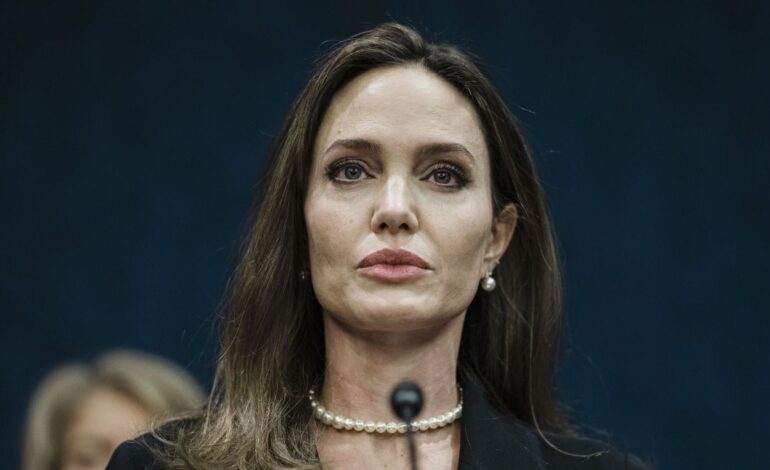

In an era when global crises compete for attention and compassion fatigue sets in, one actress is using her platform to ensure voices from conflict zones are heard. Angelina Jolie, known for decades of humanitarian work, shared a deeply personal letter from a woman living through the Gaza conflict. The letter doesn’t present statistics or policy arguments. It presents daily reality: loss, struggle, and resilience. In doing so, Jolie reminds the world that behind humanitarian crises are human beings whose suffering demands attention.
A Voice From the Ground
Jolie posted on social media a letter written by a 26-year-old woman living in Gaza. This woman isn’t a public figure. She isn’t a politician or activist. She’s a person navigating daily survival in one of the world’s most difficult situations.
The letter is raw and honest. It describes losing her father in an artillery attack. It details living in a tent with her paralyzed twin sister and other family members. It paints a picture of existence that most people in secure, stable countries struggle to imagine.
By sharing this letter, Jolie does something important. She moves the conversation from abstract statistics about casualties and displacement to the lived experience of an actual person. The woman becomes not a number in a report but a human being with a story.
Discovering Something Worse Than Death
The most powerful passage in the letter describes a realization the writer came to during this conflict. In previous conflicts, she believed death and loss were the hardest experiences. But this crisis revealed something worse.
She writes about surviving but losing one’s spirit. About carrying psychological weight as heavy as the physical rubble surrounding her. About continuing to exist while hope seems to slip away. This insight goes beyond conventional descriptions of suffering.
It speaks to the psychological toll of prolonged conflict. To what happens when survival itself becomes painful. To how endless crisis can erode the will to live even when life technically continues.
The Daily Realities
The letter describes concrete hardships that define daily existence in Gaza.
Water: Fetching water becomes a dangerous task under extreme conditions. People stand in lines for what should be freely available.
Food: People depend on charity kitchens for meals. Children don’t know whether they’ll eat that day.
Education: Schools don’t function. Children forget what classrooms look like. They forget how to hold pens. Their childhood becomes about survival, not learning.
Health: Hospitals don’t function. Medical care is absent. Fires and toxic gases cause injury and death. Medicines are unavailable.
Energy: Electricity is scarce. Cooking fuel is limited. Simple tasks require extraordinary effort.
The Loss of Childhood Dreams
One phrase from the letter hits particularly hard: many children’s dreams have become restricted to basic survival. A child’s dream should be about becoming a doctor, an artist, an athlete. Instead, it’s about getting a liter of water or a plate of food.
This represents not just present suffering but future opportunity stolen. A generation of children is growing up in crisis. Their development is shaped by survival, not growth. Their aspirations are measured in basic needs, not possibilities.
The long term consequences of this are incalculable. A generation shaped by scarcity and fear carries different expectations about what life can offer.
But Hope Remains
What makes this letter remarkable isn’t just its unflinching description of hardship. It’s that it ends on a note of resilience.
Despite everything described, the writer affirms that people in Gaza continue striving for joy and happiness. They continue holding onto hope for a better future. They refuse to let their suffering completely define them.
This resilience is perhaps the most important message. Not the suffering, though that matters. But the human capacity to endure suffering while still reaching toward something better. To keep hoping even when hope seems impossible.
Why Jolie’s Platform Matters
Angelina Jolie has spent decades in humanitarian work. She’s visited refugee camps. She’s advocated for displaced people. She’s used her celebrity to raise awareness about global crises.
Her decision to share this particular letter reflects her understanding that celebrity platform has responsibility. She doesn’t speak for Gaza. Instead, she amplifies voices from Gaza.
This distinction matters. Anyone with a significant platform could comment on global crises. But thoughtful people use their platform to give visibility to people directly experiencing those crises, not to make themselves the center of the story.
By sharing this woman’s letter, Jolie says: listen to people living this reality. Don’t listen to me interpret it. Listen to them describe it in their own words.
The Attention Problem
Jolie herself noted an important reality in her post: our attention turns to other devastating events unfolding in the world. This is how global crises work. They demand attention. But attention is finite. When new crises emerge, older ones fade from public consciousness.
For the people living through those crises, the attention isn’t finite. Their suffering continues regardless of whether the world is watching. Their daily struggle for water and food doesn’t stop because the news cycle moved on.
Sharing this letter is one way to resist that pattern. It says: this crisis is ongoing. These people still need help. Our attention has shifted but their reality hasn’t changed.
What This Letter Represents
This letter is one story. It doesn’t represent all experiences in Gaza. Some people face different challenges. Some face worse situations. Some might describe things differently.
But one story is powerful because it makes suffering concrete. It moves from abstract crisis to human experience. It shows that this isn’t a distant problem happening to people we’ll never know. It’s a woman writing about her own life, her own struggles, her own hopes.
Stories like this create empathy. They create the conditions for people to care. Once you read one person’s account of daily struggle, it becomes harder to dismiss the crisis as mere political discussion.
Looking Forward
Jolie’s post won’t solve the humanitarian crisis in Gaza. One social media post, no matter how widely shared, doesn’t change the fundamental situation on the ground.
But it does something important. It keeps the crisis visible. It reminds people that this is ongoing. It centers the voices of those experiencing it. It creates space for empathy and awareness.
Real change requires not just awareness but action from governments, international organizations, and global citizens. But awareness is where action begins. You can’t address a crisis you’ve forgotten about. You can’t help people whose struggles you don’t understand.
The Bottom Line
Angelina Jolie shared a letter because she believes people should know what daily life looks like in Gaza. The letter doesn’t offer political arguments or policy solutions. It offers something more fundamental: human testimony about human struggle.
It shows that behind every statistic about casualties and displacement are real people. People with names and families. People who have experienced loss. People who continue hoping for something better despite overwhelming reason for despair.
In sharing this, Jolie reminds the world that humanitarian crises are not abstract. They are personal. And that matters for how we understand and respond to them.
The woman who wrote this letter continues living in Gaza, managing daily hardship, and holding onto hope. Her story deserves to be known. Not as a tragedy for consumption, but as a testimony to human resilience and suffering.
Also Read:
Beauty Myths vs Facts: Smart Ways to Care for Your Skin
Why Experience Still Matters in Manufacturing Despite AI Predictions