

New EU Regulations Could Bring Tougher Social Media Rules for Kids
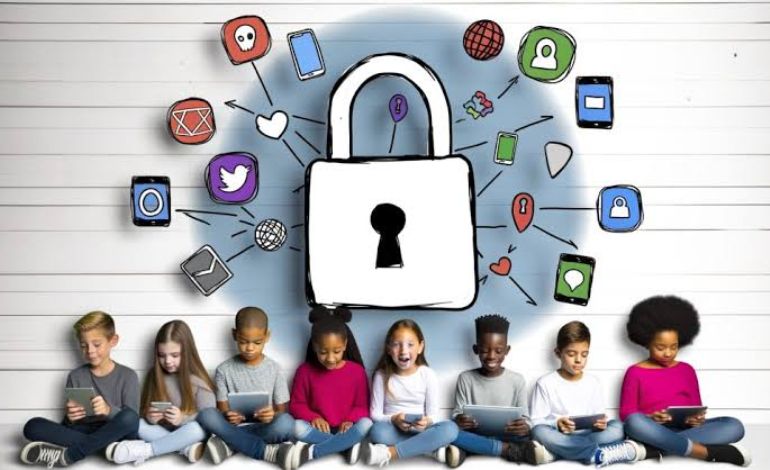

The European Union unveiled sweeping plans on Thursday to impose strict age limits on children’s access to social media, video games and AI assistants, while requiring companies to prove their platforms are safe before minors can use them at all.
The proposal, dubbed the EU KIDS Act, follows a day after European Commission President Ursula von der Leyen announced the bloc’s intention to bar children under 13 from social media entirely and allow only limited, supervised access for those aged 13 to 15. Von der Leyen described the approach as reversing the burden of proof, telling reporters that platforms now have to prove to regulators that they are safe, rather than the other way around. The move comes after mounting evidence that social media use is harming children’s physical and mental wellbeing, exposing them to predators, scammers and bullies with little protection in place.
Under the plan, teens aged 15 and older would be able to set up standard social media accounts, while 13- and 14-year-olds could only access the platforms through supervised mini accounts linked to a parent or guardian, with screen time capped at one hour a day. The EU says the goal is to put parents in control, allowing them to manage a child’s access to video-sharing apps and other services and set limits on time spent online.
A second part of the proposal focuses on making platforms themselves safer before children ever log on. That includes banning recommendation systems built on profiling that can steer children toward harmful content, prohibiting reward-based mechanisms designed to keep users engaged, and blocking unsolicited contact from strangers. Notably, the plan would also require AI chatbots to avoid simulating relationships in ways that create emotional dependency, a provision introduced after several cases worldwide linked children’s interactions with such tools to tragic outcomes. Children’s profiles would be private by default, with location sharing, cameras and microphones turned off, and minors would be given simple tools to block or mute other users.
The proposal still needs to clear negotiations between the European Parliament and EU member states before it becomes law, a process that could take months, though the European Commission has urged swift adoption given what it calls a clear demand for urgent, comprehensive action.
To enforce the rules, platforms would need to submit a compliance plan to the Commission and an independent auditor for review of any new service or feature. If the auditor isn’t satisfied, the Commission can demand corrective measures, and it can open formal investigations that must conclude within 90 days, with violations potentially carrying fines of up to six percent of a company’s annual turnover, mirroring penalties under the EU’s existing Digital Services Act.
Alongside the legislation, the EU is developing an age-verification app intended to prevent children below the relevant thresholds from accessing social media. Privacy advocates have raised concerns about the tool, but Brussels maintains it won’t share personal data with platforms, instead providing only a simple yes-or-no verification through cryptographic means. Platforms won’t be required to use the EU’s app specifically, but they will need to use some form of age-assurance tool to verify new users’ ages.
Also Read:
Israeli Authorities Issue Al-Aqsa Mosque Bans Against 7 Palestinians
Saudi Arabia Strengthens Early Warning Capabilities to Protect Communities

























1 Comment
[…] New EU Regulations Could Bring Tougher Social Media Rules for Kids […]