





How War Risks Are Driving Oil Price Swings Despite Iran Sanctions Talks

NEW DELHI – Oil prices swung between gains and losses Monday as investors navigated conflicting signals from escalating military threats and Washington’s temporary removal of sanctions that unleashed millions of barrels of Iranian seaborne crude into global markets.
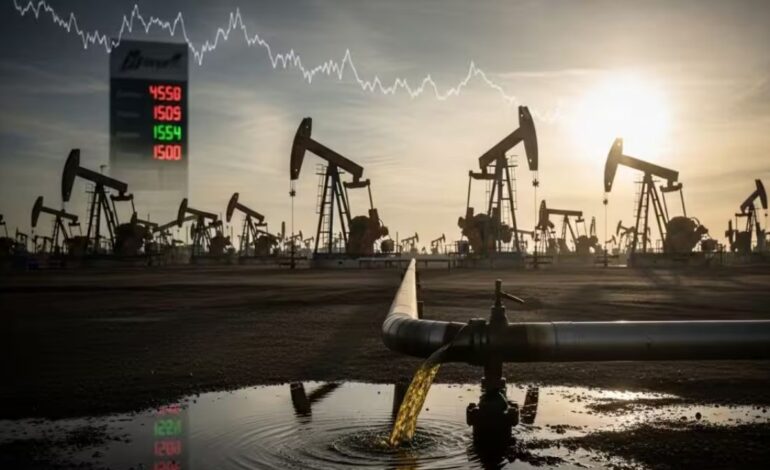
Brent crude rose 65 cents to $112.84 per barrel by mid-morning Saudi time, while US West Texas Intermediate climbed 84 cents to $98.75 per barrel. Both contracts had fallen more than a dollar earlier in the trading session, reflecting rapid sentiment shifts.
The gap between Brent and WTI widened to over $13 per barrel, the largest spread in years, reflecting divergent market concerns about regional supply disruptions.
President Trump Saturday threatened to “obliterate” Iran’s power plants unless the Strait of Hormuz reopened within 48 hours, escalating tensions despite his earlier comments about “winding down” the now-week-long conflict. Iran’s Parliament Speaker Mohammad Baqer Qalibaf responded by warning that critical Middle East infrastructure could be “irreversibly destroyed” if power plants were targeted.
Market analysts view the rhetoric as signaling further escalation. “Trump is trying to show he can out-escalate and that way ends in scorched earth for Gulf infrastructure,” said Amrita Sen, founder of Energy Aspects. “This clearly means more escalation, which means higher oil prices.”
The International Energy Agency executive director called the Middle East crisis “very severe” and worse than the combined oil shocks of the 1970s. The war has damaged major energy facilities and nearly halted Strait of Hormuz shipping, which carries about 20 percent of global oil and liquefied natural gas.
Analysts estimate a loss of seven to ten million barrels daily of Middle East production. Iraq declared force majeure on all oilfields developed by foreign companies, with Basra Oil Company cutting production to 900,000 barrels per day from 3.3 million.
Meanwhile, Indian refiners plan to resume purchasing Iranian oil following sanctions relief, while Asian refiners examine similar moves. The sanctions removal temporarily increased available supply, offsetting some war-driven scarcity concerns.
Oil market direction ultimately depends on Middle East shipping flow restoration. However, threats to strike Iranian energy infrastructure appear unlikely to pressure Tehran into reopening the Strait while Iran retains capacity for retaliatory strikes on neighboring states.
Also Read:
Why the Venezuelan President Replaced Senior Military Commanders
Trump Compares Pearl Harbor to Iran Strikes During Meeting with Japan’s Leader