
US Approves Emergency Military Aid to Israel: Key Facts You Should Know
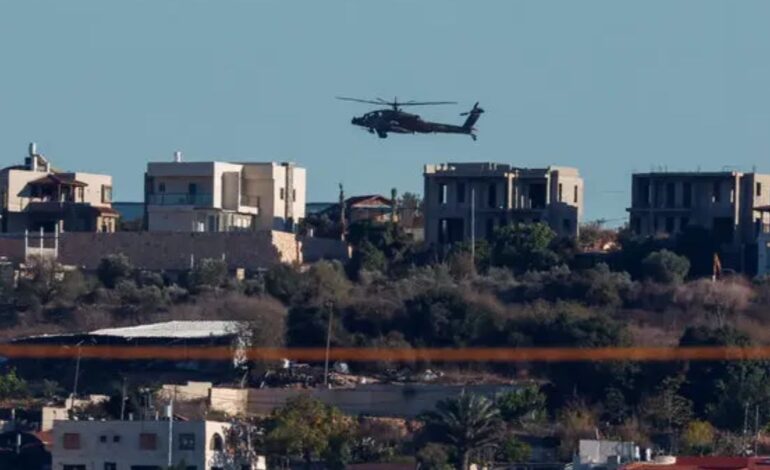

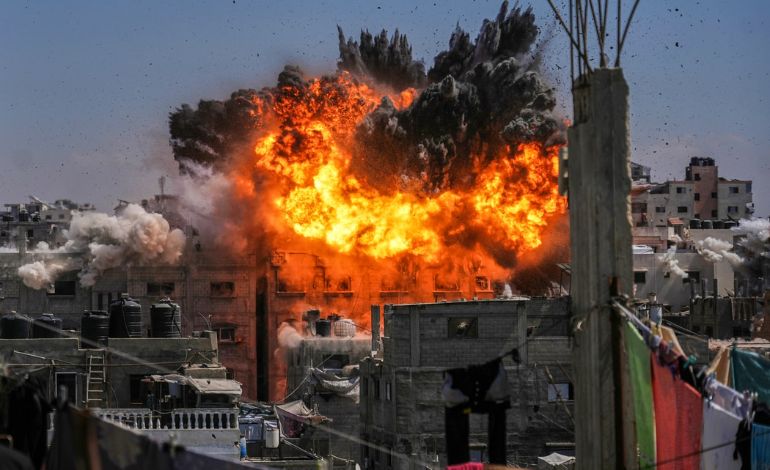
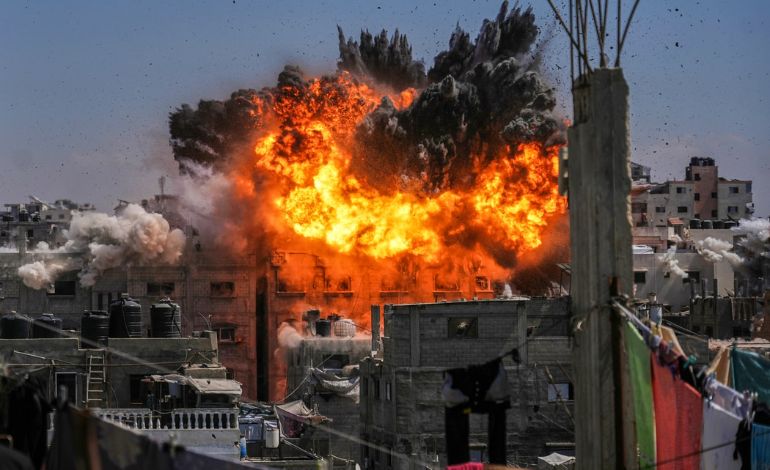
On Friday, the United States approved what it officially deemed an “emergency” sale of military munitions to Israel. The numbers tell a straightforward story: 12,000 bomb casings worth approximately $151.8 million, complete with engineering support, logistics, and technical assistance from American contractors. It was presented as a routine transaction, necessary and justified.
But the manner in which this sale was approved tells a far more complicated story—one about power, urgency, constitutional process, and the question of who decides when a nation goes to war.
The Mechanism of Bypass
Under normal circumstances, arms sales of this magnitude require congressional approval. Congress has oversight authority. Elected representatives are meant to review significant military commitments, question their necessity, debate their wisdom. It is a built-in check on executive power, a way of ensuring that decisions affecting national security and military engagement are not made by a president alone.
Secretary of State Marco Rubio, however, bypassed this process entirely. He invoked emergency authority under the Arms Export Control Act, determining that an emergency existed so pressing that the normal deliberative process could not be followed. The sale was approved immediately, without congressional review, without public debate, without the checks and balances that the constitutional order was designed to provide.
The State Department’s justification was formal and bureaucratic: “The Secretary of State has determined and provided detailed justification that an emergency exists that requires the immediate sale to the Government of Israel of the above defense articles and defense services is in the national security interests of the United States.”
The statement is careful. It notes that detailed justification exists. It asserts that the nation’s security interests are at stake. But it does not share what that detailed justification contains. It does not allow for public scrutiny. It does not invite congressional input.
The Question of Necessity
What makes this sale so urgent that normal procedures cannot be followed? The stated purpose is clear enough: “The proposed sale will improve Israel’s capability to meet current and future threats, strengthen its homeland defense, and serve as a deterrent to regional threats.”
These are legitimate military objectives. Strengthening defensive capability. Deterring threats. Improving homeland security. These are goals that any nation would pursue, and goals that the United States has long supported Israel in pursuing.
But the invocation of emergency to bypass Congress suggests something more pressing than the routine improvement of military capability. It suggests that Israel faces an immediate threat so severe that waiting for congressional review—a process that might take days or weeks—is not acceptable. It suggests a situation so urgent that the normal mechanisms of democratic deliberation must be suspended.
One week earlier, the United States and Israel had launched what they described as a massive military campaign against Iran. That campaign was the trigger for Iran’s subsequent retaliatory strikes across the Gulf. The emergency arms sale, in other words, is being justified as a necessary response to a conflict that the US and Israel themselves initiated.
The Production Acceleration
Adding another dimension to the narrative, President Trump announced on social media that major US defense companies have agreed to quadruple production of advanced weapons. This is not a modest increase. This is not a measured response to existing shortfalls. This is a massive ramping up of military manufacturing.
Quadrupling production means doubling the already increased production. It means transforming the capacity of American defense industries to an entirely new scale. It means that what was sold in Friday’s emergency sale may be merely the first installment in a much larger transfer of weapons.
The announcement came casually, via social media, almost as an afterthought to the larger discussions of military engagement with Iran. But it represents a profound commitment of American industrial capacity to sustained military operations in the Middle East.
The Congressional Objection
Not all of Congress accepted this without pushback. Congressman Gregory Meeks, a Democrat on the House Foreign Affairs Committee, directly challenged the emergency invocation and what it implied.
“Rushing to invoke emergency authority to circumvent Congress tells a different story,” Meeks said, pointing out the contradiction between the administration’s claims of preparedness and the sudden assertion that emergency procedures were necessary. He highlighted the fundamental problem: “The Trump administration has repeatedly insisted it was fully prepared for this war. Rushing to invoke emergency authority to circumvent Congress tells a different story.”
His most pointed observation: “This is an emergency of the Trump administration’s own creation.”
This argument deserves examination. If the administration was genuinely prepared for a conflict with Iran, if this war was anticipated and planned for, then why the sudden need to invoke emergency procedures to approve weapons sales? Why bypass Congress if everything was expected and planned?
The emergency invocation, Meeks suggests, reveals that the situation is not as controlled as official statements claim. It reveals improvisation. It reveals urgency that was not anticipated. It reveals a situation unfolding faster than prepared contingencies can accommodate.
The Normalization of Circumvention
What makes this moment significant extends beyond this particular arms sale. It represents a willingness to use emergency powers to bypass normal democratic processes. It establishes a precedent. It normalizes the circumvention of congressional oversight in the name of urgency.
Emergency powers exist for genuine emergencies—situations where immediate action is necessary and waiting for normal processes would result in unacceptable harm. They are meant to be rare, used only when no alternative exists.
Yet emergency powers are also easily abused. They can be invoked for matters that, while genuinely urgent, do not actually require the suspension of democratic oversight. They can become habitual, used not because they are necessary but because they are available and efficient.
A president who can bypass Congress to approve military sales can bypass Congress for other military decisions. The line between what requires emergency invocation and what simply requires executive efficiency begins to blur.
The Broader Pattern
This arms sale does not exist in isolation. It is part of a larger pattern of American military commitment to Israel and to continued conflict in the Middle East.
The US and Israel initiated a massive military campaign against Iran on February 28. Iran responded with retaliatory strikes. The US and Israel have threatened further response. Defense companies are accelerating production. Weapons are flowing to Israel in emergency sales that bypass normal oversight.
The trajectory is clear. The machinery of military escalation is accelerating. The mechanisms that typically slow decision-making—deliberation, congressional review, public debate—are being set aside in favor of speed and efficiency.
Whether this acceleration leads to deterrence and de-escalation, or whether it leads to further escalation and broader conflict, remains to be seen. But the direction of travel is unmistakable.
Democracy Under Strain
At its core, this moment reveals something troubling about how modern democracies respond to perceived emergencies. The normal checks and balances that are meant to prevent precipitous action are suspended. The deliberative processes that are meant to ensure wise decision-making are bypassed. Speed is prioritized over scrutiny.
Sometimes this is necessary. Genuine emergencies do exist where normal procedures cannot be followed. But the frequency with which emergency powers are invoked, the breadth of their use, the ease with which they bypass constitutional oversight—these raise questions about whether democracy can survive under conditions of perpetual emergency.
If every crisis becomes an excuse to bypass Congress, if every urgent situation becomes justification for executive action without oversight, then the constraints on presidential power weaken with each use.
Congressman Meeks’ point, then, is not merely about this particular arms sale. It is about a larger question: What does it mean for democracy when the normal mechanisms of democratic governance can be suspended so readily?
Looking Ahead
The arms sale will proceed. Congress will not block it. The weapons will flow to Israel. The emergency determination will stand.
But the question lingers: Is this the response of a nation confident in its strategy and prepared for what lies ahead? Or is it the response of a nation improvising, accelerating its military capability in hopes of controlling a situation that is spinning faster than anticipated?
The emergency invocation suggests the latter. And in that suggestion lies a warning about what may yet come.
Also Read:
Who Is Pete Hegseth? The Man Leading Donald Trump’s Hardline Approach Against Iran
Kyiv’s Drone Technology Gains Global Attention as Russia-Ukraine Talks Stall