

German Drone Deal Controversy: Impact of Thiel’s Role in the Start-Up
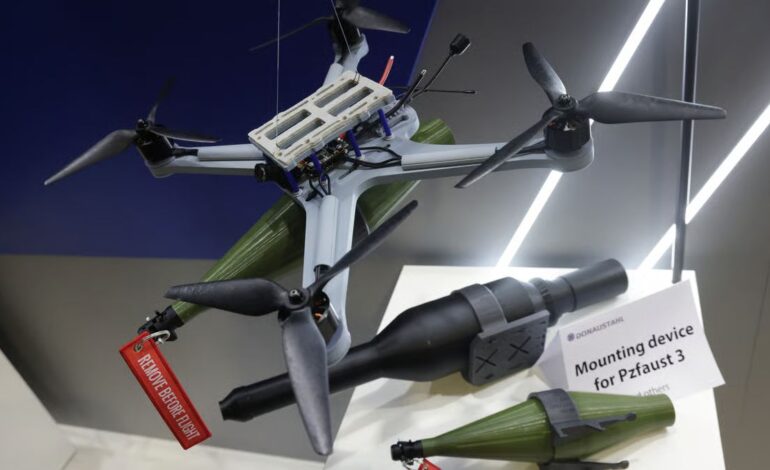

A proposed contract to supply combat drones to Germany’s military has run into political turbulence, with lawmakers raising concerns about the involvement of US tech billionaire Peter Thiel in one of the defense start-ups bidding for the work.
The contracts—for Berlin-based Stark Defense, in which Thiel holds a stake, and Munich-based Helsing—are scheduled to come before parliament’s budget committee next week. Their combined initial value is 536 million euros ($630 million), but options could expand the total into the billions.
The Thiel Factor
Thiel, a German-born billionaire who co-founded PayPal and Palantir and was an early investor in Facebook, is a close confidante of President Donald Trump. His right-wing libertarian views and outspoken skepticism of liberal democracies have made him a highly polarizing figure—and a source of concern for some German lawmakers.
Greens MP Sara Nanni, her party’s security policy spokeswoman, told AFP that the controversial billionaire’s influence raises potential problems. Given the strategic importance of the deal, she said, “investor-related risks need to be carefully vetted. I have to take a very close look at it.”
Dietmar Bartsch of the far-left Die Linke went further, calling for the deal to be halted. Paying billions to a firm sponsored by “an avowed opponent of liberal democracies is unacceptable,” he argued.
Defense Minister’s Reservations
Defense Minister Boris Pistorius, a Social Democrat, also expressed caution. Before awarding the contract to Stark Defense, he said Tuesday, it must be clarified “what influence Mr. Thiel actually has.”
The concerns are not universal. Thomas Roewekamp, a conservative MP who chairs parliament’s defense committee, largely dismissed worries about Thiel in comments to the RND news network. The “small stake held by an American investor” is only of “minor importance,” he said, adding that the drones are urgently needed—particularly to defend German troops deployed to NATO’s eastern flank in Lithuania.
Roewekamp acknowledged there remain “open questions regarding the price, the quantity and the technical capabilities” of the drones, but said those issues can be resolved “through the usual parliamentary process.”
Stark Defense Responds
Stark Defense declined to disclose details about Thiel’s stake, other than to confirm it remains below 10 percent. The company said Thiel’s stake does not involve outsized special rights or influence, and that outside access to confidential technical information is regulated by German authorities.
The Broader Debate
The controversy touches on a larger question facing European defense procurement: how to balance security concerns against the need to build domestic technological capability.
Speaking generally, lawmakers like Nanni have voiced support for taking risks in order to develop Europe’s tech and defense industries. “If we don’t want to buy high-tech equipment from the US, then we also have to be prepared to take on more risk,” she told AFP.
SPD MP Andreas Schwarz, a budget and defense policy expert, noted that Thiel “has stakes in other software companies used by German authorities and NATO.” He said there remains broad parliamentary support for awarding the drone contracts, but added that if the defense minister thinks more clarity is needed about Thiel’s influence, “parliament will support him in this.”
What Comes Next
The budget committee’s review next week will provide the first formal test of whether concerns about Thiel’s involvement can be resolved—or whether they will delay or derail a deal that defense officials consider strategically important.
For Germany, the stakes are both practical and political. The drones are needed for troop protection. The companies involved represent European industrial capacity. And the investor at the center of the controversy embodies the complex relationship between technology, politics, and national security in an era when those boundaries have never been less clear.
Also Read:
France and Algeria Agree to Resume Security Cooperation, Says Minister