





Ethiopian Troop Deployment Near Tigray Sparks Fresh Security Concerns
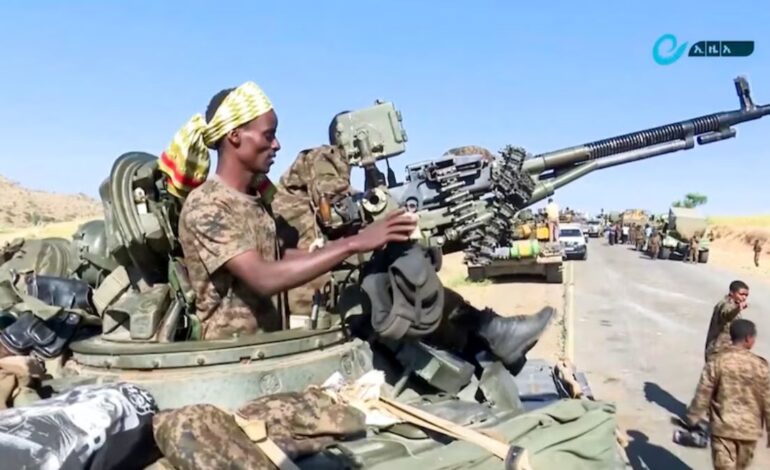

Tensions are rising once again in northern Ethiopia. Federal and Tigrayan forces have massed along the border of the Tigray region, a Western diplomatic source told AFP on Tuesday, raising fears of a return to full-scale conflict less than four years after a devastating civil war formally ended.
The 2020-2022 Tigray war pitted federal troops—backed by local militias and the Eritrean army—against rebels from the Tigray People’s Liberation Front. The African Union estimates that at least 600,000 people were killed in the conflict, one of the deadliest of the twenty-first century.
A peace deal signed in 2022 was never fully implemented. Renewed fighting in January prompted the suspension of flights to and from Tigray for several days. Now, the accumulation of forces on both sides suggests the fragile calm may be unraveling.
Troops Face to Face
“The ENDF (the federal army) is encircling Tigray,” a Western diplomatic source told AFP on condition of anonymity. “Tigrayan forces are also deploying toward their borders.” He described the situation as deeply concerning: “Such large numbers of troops positioning themselves face to face is not a good sign.”
A local source in Tigray, also speaking anonymously, confirmed the scale of mobilization. “There is a massive mobilization of federal forces and Tigrayan forces,” he said. He appealed for international intervention: “If the international community does not exert pressure on the parties to the conflict to resolve their dispute through dialogue, the risk of war increases.”
Regional Complications
The tensions are not confined to Ethiopia’s internal dynamics. Relations between Ethiopia and Eritrea, which fought alongside federal forces against the TPLF during the war, have deteriorated significantly. The Ethiopian government now accuses Eritrea of supplying weapons to Tigrayan rebels—a charge Asmara denies.
The accusation, if true, would represent a dramatic reversal of alliances. Eritrea’s involvement in the original conflict was already controversial, with reports of atrocities committed by Eritrean forces in Tigray. Any renewed intervention could escalate the conflict beyond Ethiopia’s borders.
Eritrea gained independence from Ethiopia in 1993 after decades of armed struggle. The two Horn of Africa nations later fought a 1998-2000 border war in which tens of thousands died. Relations have never been fully normalized, and the current allegations threaten to reopen old wounds.
A Warning from the UN
Last week, Volker Turk, the United Nations High Commissioner for Human Rights, issued an urgent appeal. He called on all parties to take de-escalation measures “before it is too late.” The warning reflects growing international alarm at the prospect of renewed war in a region still recovering from the previous conflict’s devastation.
The 2020-2022 war was marked by atrocities on all sides: mass killings, sexual violence, and widespread destruction of infrastructure. The humanitarian toll was catastrophic, with millions displaced and hundreds of thousands facing famine conditions. A return to full-scale hostilities would likely produce similar suffering.
What’s at Stake
The core disputes that fueled the original conflict remain unresolved. The TPLF, which dominated Ethiopian politics for nearly three decades before being sidelined by Prime Minister Abiy Ahmed, retains significant military capacity. Federal authorities insist on the primacy of central government control. Tigrayan leaders demand autonomy and accountability for wartime abuses.
The current troop deployments suggest both sides are preparing for the possibility that diplomacy will fail. Whether that preparation reflects genuine defensive posturing or offensive intent is impossible to know from outside. What is clear is that the margin for miscalculation has narrowed dangerously.
The Path Forward
Preventing renewed war requires urgent international engagement. The African Union, which brokered the 2022 peace deal, has a particular responsibility to press both sides toward dialogue. The United Nations and Western powers must reinforce the message that a return to full-scale conflict is unacceptable.
For the people of Tigray, who have already endured unimaginable suffering, the stakes are existential. For Ethiopia, which aspires to regional leadership and economic transformation, renewed war would be a catastrophic setback. For the Horn of Africa, already beset by conflict in Sudan and instability in Somalia, another major war could destabilize the entire region.
As troops mass along the border, the clock is ticking. The question is whether diplomacy can move faster than divisions—and whether the lessons of 600,000 dead can outweigh the logic of confrontation.
Also Read:
Calls for Action Grow as Reports of Worker Exploitation Surface in Croatia