


India Leads Global Talks on AI Safety at Major Summit
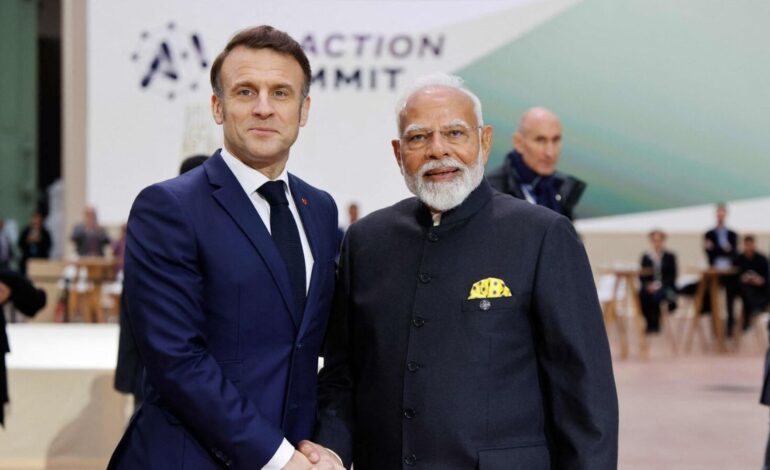

A global artificial intelligence summit opened in New Delhi on Monday, bringing together world leaders, tech executives, and policymakers to grapple with the opportunities and risks posed by rapidly advancing technology. Prime Minister Narendra Modi inaugurated the five-day AI Impact Summit, framing it as evidence of India’s progress in science and technology and a showcase for the capabilities of the country’s youth.
“This occasion is further proof that our country is progressing rapidly in the field of science and technology,” Modi posted on X. “It shows the capability of our country’s youth.”
The gathering marks the fourth annual international meeting focused on AI, following previous summits in Paris, Seoul, and Britain’s Bletchley Park. Touted as the largest edition yet, organizers expect 250,000 visitors across the sector, including 20 national leaders and 45 ministerial-level delegations.
Big Names, Big Questions
The attendee list reads like a who’s who of technology and politics. OpenAI CEO Sam Altman and Google’s Sundar Pichai are scheduled to participate, though Nvidia chief Jensen Huang reportedly canceled due to unforeseen circumstances. French President Emmanuel Macron and Brazilian President Luiz Inacio Lula da Silva are among the national leaders Modi will meet during the summit.
The agenda spans the full spectrum of AI’s impact: job disruption, child safety, environmental effects, and the need for governance frameworks that balance innovation with protection. The loose themes of “people, progress, planet”—dubbed three “sutras”—reflect the breadth of ambition.
Safety Concerns Persist
AI safety remains a priority, particularly the dangers of misinformation and harmful content. Recent backlash over Elon Musk’s Grok AI tool, which allowed users to generate sexualized images of real people including children, underscored the urgency of establishing guardrails.
“Child safety and digital harms are also moving up the agenda, particularly as generative AI lowers the barrier to harmful content,” said Kelly Forbes, director of the AI Asia Pacific Institute. “There is real scope for change,” she added, though she cautioned that progress might not come quickly enough.
Forbes’s organization is researching how countries like Australia are requiring platforms to confront these issues—work that could inform broader international approaches.
The Governance Gap
Whether the summit will produce meaningful commitments remains an open question. Amba Kak, co-executive director of the AI Now Institute and a former AI adviser to the US Federal Trade Commission, expressed skepticism.
Industry commitments at previous events, Kak said, “have largely been narrow ‘self regulatory’ frameworks that position AI companies to continue to grade their own homework.” She is participating in the Delhi summit, suggesting that inside engagement, however critical, remains preferable to absence.
The Bletchley gathering in 2023 was explicitly called the AI Safety Summit. Subsequent meetings have broadened their focus, a shift that risks diluting concrete action. At last year’s AI Action Summit in Paris, dozens of nations signed a statement calling for “open” and “ethical” AI regulation—but the United States did not sign, with Vice President JD Vance warning that “excessive regulation… could kill a transformative sector just as it’s taking off.”
India’s Role
Organizers emphasize that this is the first AI summit hosted by a developing country, framing it as an opportunity to shape a vision “that truly serves the many, not just the few,” in the words of India’s IT ministry.
India has made strides in AI competitiveness, leaping to third place in an annual global ranking by Stanford researchers, overtaking South Korea and Japan. But experts caution that the country still has a long way to go before it can rival the United States and China in AI development and deployment.
Seth Hays, author of the Asia AI Policy Monitor newsletter, predicted that summit discussions would center on “ensuring that governments put up some guardrails, but don’t throttle AI development.” He added that while there might be announcements of increased state investment, “it may not move the needle much—as India needs partnerships to integrate on the international scene for AI.”
What Comes Next
The five-day summit will produce a “shared roadmap for global AI governance and collaboration,” according to organizers. Whether that roadmap includes enforceable commitments or remains a statement of principles will determine its lasting significance.
For India, hosting the event reinforces its claim to leadership in the Global South and its ambition to be a major player in shaping AI’s future. For the world, the gathering offers another chance to move from talk to action—an opportunity that previous summits have only partially seized.
The technology is not waiting. Neither, increasingly, are the risks. The question is whether Delhi can deliver what Bletchley, Paris, and Seoul could not: a framework that holds AI developers accountable without stifling the innovation that drives progress.
Also Read:
Venezuela Releases 17 Political Prisoners Ahead of Historic Amnesty Law