




California’s $4 Trillion Economy: Why the Prosperity Feels Out of Reach
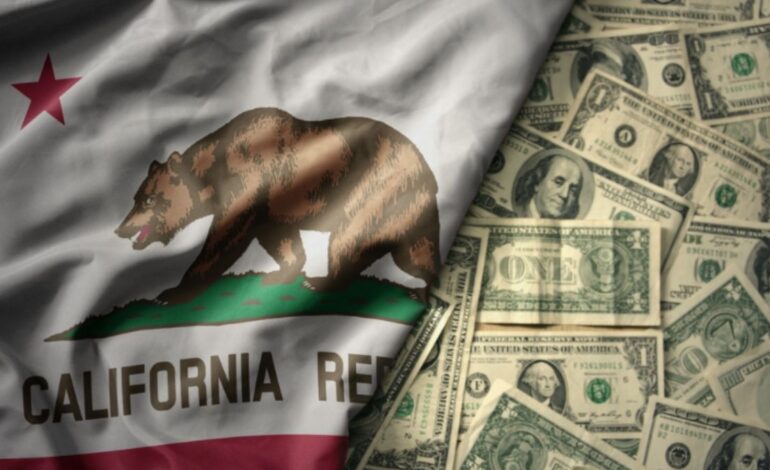

California has reclaimed its bragging rights as the world’s fourth-largest economy, edging past Japan by a mere $16 billion to reach an estimated GDP of $4.28 trillion. The milestone, based on Bureau of Economic Analysis data and IMF estimates, places the Golden State behind only the United States as a whole, China, and Germany in economic output.
Yet for many Californians, the headline numbers bear little resemblance to lived experience. Consumer confidence in the state hit a five-year low in January. The disconnect between macroeconomic scale and household reality has become a defining feature of California’s economic moment.
The Numbers Game
GDP measures the total value of goods and services produced within a geographic boundary. It is a broad barometer of economic activity, often treated as a proxy for prosperity. But like any average, it obscures as much as it reveals.
California’s economy grew at a 4.5 percent annualized pace in the third quarter of 2025—the fastest since 2023 and slightly above the national rate of 4.4 percent. That growth ranked 25th among states, a middle-of-the-pack performance for an economy that likes to boast about global heft. Texas grew at 4.2 percent, Florida at 3.5 percent.
The strongest growth occurred in the nation’s midsection: Kansas at 6.5 percent, South Dakota at 6.3 percent, Arkansas at 5.8 percent. The worst performers included North Dakota, the District of Columbia, and Minnesota.
The Currency Wildcard
The global ranking comes with a asterisk. GDP comparisons between countries and states are calculated in U.S. dollars, making currency fluctuations a significant factor. The dollar has been weak over the past year, which may flatter California’s position relative to Japan and other competitors when the IMF updates its figures in April.
The race is tight. Just behind Japan and California sits India at $4.125 trillion, followed by the United Kingdom at $3.96 trillion. A gap of roughly $300 billion—about 7 percent—separates these economies. India, powered by the world’s largest population and rapid growth, is widely expected to overtake both in the near future.
The Prosperity Paradox
So why doesn’t it feel like the fourth-largest economy?
GDP measures production, not distribution. It counts the value of goods and services regardless of who captures that value. When a tech company goes public and creates millionaires among its employees and investors, GDP rises. When those same millionaires drive up housing costs in already expensive cities, GDP does not capture the squeeze on everyone else.
California’s economic growth has been real but uneven. The state’s technology and entertainment sectors have generated enormous wealth, but that wealth has concentrated in specific industries, specific regions, and specific demographics. For Californians outside those circles—or inside them but without equity—the experience can feel like watching a parade from behind a window.
The Confidence Gap
Consumer confidence, which hit a five-year low in January, captures the disconnect. People look at their own bank accounts, their rent checks, their grocery bills, and their job security. They compare those realities to the headlines about trillion-dollar economies and wonder what they are missing.
They are missing the gap between aggregate and individual. GDP does not care about housing affordability. It does not track whether wages keep pace with costs. It does not measure whether the person who cleans the office of a billion-dollar startup can afford to live within an hour of that office.
A State of Contrasts
California has long been a place of extremes. Its natural beauty, cultural influence, and economic dynamism coexist with deep inequality and chronic affordability challenges. The fourth-largest economy ranking is real. So is the struggle of families priced out of neighborhoods they have called home for generations.
The state outpaced Texas and Florida in third-quarter growth—a reversal of recent trends that saw those rivals expanding faster. But growth alone does not address underlying structural issues: housing supply, income disparity, the cost of living in communities shaped by decades of policy choices.
What the Ranking Means
Being the world’s fourth-largest economy matters. It signals productive capacity, attracts investment, and confers influence. But it is not a measure of broad-based prosperity. It does not tell you whether the people who make that economy run can afford to participate in its fruits.
California’s economic leaders might celebrate the ranking. Its policymakers might use it as evidence of success. But for the Californian staring at a rent increase while reading about $4 trillion, the number will always feel abstract.
The gap between the headline and the checkbook is not a failure of perception. It is a reflection of reality—one that GDP, for all its utility, was never designed to capture.
Also Read:
Venezuela Releases 17 Political Prisoners Ahead of Historic Amnesty Law