






New Italy Migration Law Allows Naval Blockades on Migrant Ships
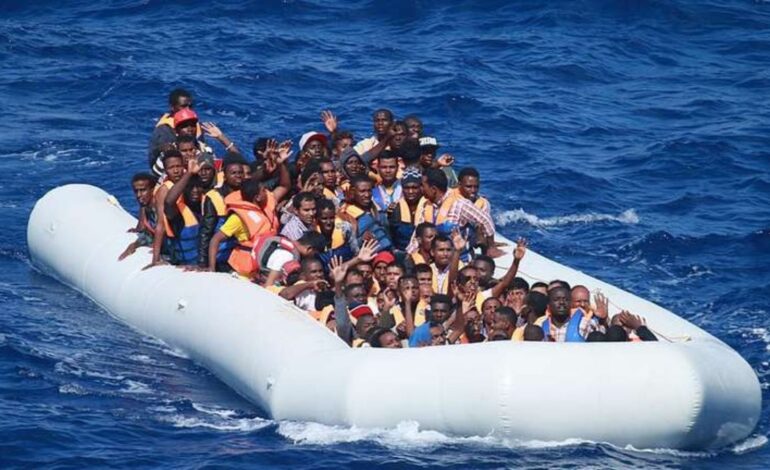

Italy’s conservative government, led by Premier Giorgia Meloni, approved sweeping new migration legislation on Wednesday that authorizes naval blockades to prevent migrant vessels from entering Italian territorial waters. The bill, passed in a cabinet meeting and now headed to parliament for final approval, represents one of Europe’s most aggressive state-led efforts to physically interdict migration at sea.
Blockade Powers and Triggers
Under the new framework, Italian authorities may impose a 30-day naval blockade on migrant ships—extendable up to six months—when vessels pose “serious threats to public order or national security.” The legislation specifically cites the risk of terrorist acts or terrorist infiltration as justification. A blockade may also be triggered by a “drastic influx” of migrants that could overwhelm border management capacity.
Violators face fines of up to €50,000 and confiscation of their vessels for repeated offenses—a provision widely interpreted as targeting humanitarian rescue ships operating in the central Mediterranean.
Externalization and Offshore Processing
The bill authorizes the transfer of intercepted migrants to “third countries other than their country of origin, with which Italy has entered into specific agreements.” This provision signals the Meloni government’s intent to resurrect its stalled offshore processing initiative. Two reception centers constructed in Albania at significant expense have remained largely inactive for nearly two years, ensnared in legal challenges and operational complications.
Wednesday’s legislation provides fresh legal grounding for efforts to process asylum claims outside Italian territory—a model that has drawn both interest and condemnation across Europe.
EU Context and Alignment
The Italian measure follows Tuesday’s approval of new European Union migration and asylum policies, which permit member states to deny asylum and expedite deportations for migrants originating from countries designated as “safe” or who could reasonably apply for protection outside the bloc.
Foreign Minister Antonio Tajani welcomed the EU framework, stating that confirmation of the safe countries list “proves Italy right.” Rome has signaled its intention to implement the new EU rules swiftly, positioning itself at the vanguard of Europe’s hardening posture toward irregular migration.
Domestic and International Response
Humanitarian organizations have condemned the legislation as a violation of international maritime law and refugee protections. Critics argue that blocking vessels at sea and transferring migrants to third countries circumvents legal obligations to assess asylum claims on European soil.
Government officials defend the measures as necessary assertions of national sovereignty. The naval blockade provision, in particular, represents a significant escalation—transforming migration enforcement from a border policing operation into a maritime security mission.
What Comes Next
The bill now enters parliamentary review, where its provisions will face scrutiny and likely amendment. Given Meloni’s governing majority, passage is expected, though legal challenges are almost certain to follow.
For migrants attempting the Mediterranean crossing, and for the humanitarian vessels that rescue them, the calculus has already shifted. Italian waters, once a destination, are increasingly becoming a prohibited zone—patrolled, blockaded, and legally sealed. Whether this approach deters crossings or merely redirects them toward more dangerous routes remains an open question.
The Meloni government has placed its answer on the table. Europe is watching. The Mediterranean, as always, will deliver its own verdict.
Also Read:
Bangladesh Elections 2026: BNP Announces Win, What Happens Next?
Travel Trends 2026: Canadians Look for Magic Outside the United States