




Bangladesh Steps In as Global Aid for Rohingya Education Declines
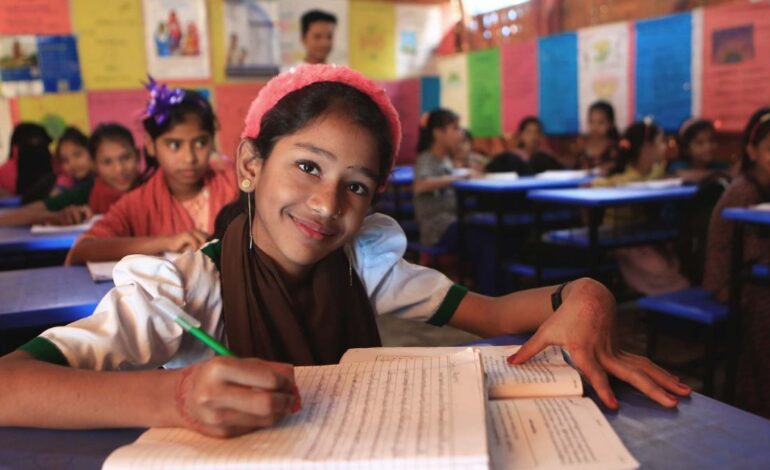

In a significant shift, the Bangladeshi government has approved its first state-funded initiative to provide primary education for Rohingya refugee children. This move comes as a direct response to a severe funding crisis that forced the closure of thousands of UN and NGO-supported learning centers within the cramped camps of Cox’s Bazar.
The decision marks a critical intervention for a generation at risk. With over 1 million Rohingya refugees in Bangladesh—half of them children—the collapse of educational services threatened to deepen the despair and instability within the camps. The crisis was triggered by a sharp decline in international aid, particularly after the United States, which had been the largest donor, suspended most of its humanitarian operations.
Bridging the Gap with a World Bank Grant
To prevent a total collapse, Bangladesh has designated over $16 million from a World Bank grant to support primary education. The funds will be channeled through UNICEF to reactivate shuttered learning centers. According to Mizanur Rahman, the refugee relief commissioner in Cox’s Bazar, only about 4,000 of the camps’ 8,000 learning centers are currently operational.
“This new funding will be used by UNICEF to operate learning centers in the Rohingya camps,” Rahman explained. “With this, many of these centers will be able to resume activities.”
Education Without Integration: A Delicate Balance
The program navigates a complex policy landscape. The Bangladeshi government maintains its longstanding position that the Rohingya presence is temporary and does not permit their integration into the national school system. Consequently, the new curriculum will be based on Myanmar’s national curriculum, not Bangladesh’s. This approach aims to prepare children for a potential future return to their homeland, while also addressing the immediate need for literacy and basic education.
The initiative plans to employ and train approximately 1,100 teachers to reach an estimated 200,000 children—about half of the school-age refugee population. The funding is approved for one year initially, with the program structured to continue until 2027, pending further negotiations.
A Stopgap in a Protracted Crisis
While this state intervention is a vital stopgap, it underscores a troubling reality: the world’s attention and resources for one of the largest refugee crises are waning. For years, education in the camps has been provided by non-profits, offering basic literacy without formal certification. The Bangladeshi government’s step into a direct funding role highlights both a commitment to stability and the profound failure of sustained international support.
The move offers a fragile lifeline. It ensures that a generation of children, born into displacement, is not entirely deprived of the foundational tools of learning. However, it also reinforces the limbo they inhabit—educated for a return that seems increasingly uncertain, in camps that Bangladesh insists cannot become a permanent home. The funding is a necessary act of responsibility, but it is a response to a crisis that demands a durable solution far beyond the classroom.
Also Read:
US Envoy Witkoff Set to Meet Israeli Leaders During Israel Visit
British Killer Known as Suffolk Strangler Pleads Guilty in Cold Case