





Russia Launches Major Air Attacks on Ukraine Before Peace Meeting
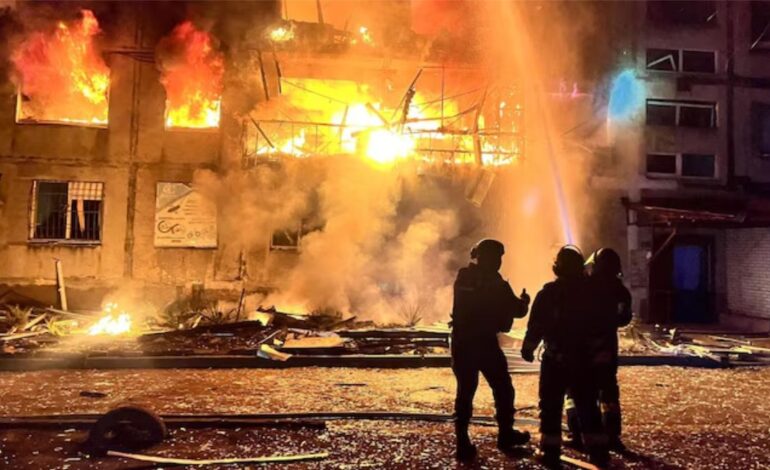

On the eve of a new round of US-brokered peace talks, Russia launched one of its largest and most devastating aerial assaults of the winter. President Volodymyr Zelensky confirmed a massive overnight attack involving at least 450 long-range drones and 70 missiles, including a record 32 ballistic missiles, targeting at least five regions of Ukraine.
The timing was starkly cynical. Representatives from Moscow and Kyiv are scheduled to meet in Abu Dhabi on Wednesday for discussions aimed at finding an end to the four-year war. Yet, as temperatures in Kyiv plunged to -20°C (-4°F), Russia chose to intensify its campaign of terror against civilians.
“Taking advantage of the coldest days of winter to terrorize people is more important to Russia than diplomacy,” Zelensky stated, condemning the strategy that specifically aims to cripple Ukraine’s power grid and deny millions of people light, heating, and running water.
The Human Cost of a Frozen War
The attack was a brutal setback for a nation already suffering through the harshest winter in years. In Kyiv alone, strikes damaged residential buildings, a kindergarten, and a gas station, wounding civilians and setting back painstaking repair efforts. Mayor Vitali Klitschko reported that 1,170 apartment buildings in the capital were left without heating shortly after the barrage.
The assault also struck the Hall of Fame at Kyiv’s National Museum of the History of Ukraine in the Second World War, a move Ukrainian Culture Minister Tetiana Berezhna called “symbolic and cynical.” The aggressor, she noted, was attacking a monument to the fight against past aggression while repeating those crimes today.
A Show of Support Amid the Storm
The attacks coincided with a visit by NATO Secretary-General Mark Rutte to Kyiv, a powerful display of solidarity. Addressing the Ukrainian parliament, Rutte assured the nation that NATO stands ready to provide “support quickly and consistently” for the long term.
“Your security is our security. Your peace is our peace. And it must be lasting,” Rutte declared, acknowledging that European nations see their own future security as tied to Ukraine’s fate. He highlighted that NATO members have provided the vast majority of missiles and air defense supplies crucial to Ukraine’s fight.
The Chilling Gap Between Words and Actions
The assault further exposed the fragility of diplomatic gestures. Just last week, a Kremlin official indicated Russia had agreed to a one-week pause in strikes on Kyiv following a request from US President Donald Trump. That pause has clearly ended, underscoring the vast gap between talk at the negotiating table and actions on the ground.
As Ukraine’s largest private power company, DTEK, reported its ninth major assault since October, the pattern is undeniable: Russia is weaponizing winter in a deliberate attempt to break civilian morale and cripple the state.
As delegations prepare to meet in Abu Dhabi, the smoke rising over Kyiv sends a clear and chilling message. The path to peace remains distant, obscured by a blizzard of missiles and the calculated cruelty of a war where freezing in the dark has become a daily battle for survival. The world watches, hoping the talks can forge a thaw, while Ukraine endures another frozen night under fire.
Also Read:
US Envoy Witkoff Set to Meet Israeli Leaders During Israel Visit
British Killer Known as Suffolk Strangler Pleads Guilty in Cold Case