
Canada Rejects China Trade Deal as Trump’s Tariff Warnings Raise Concerns
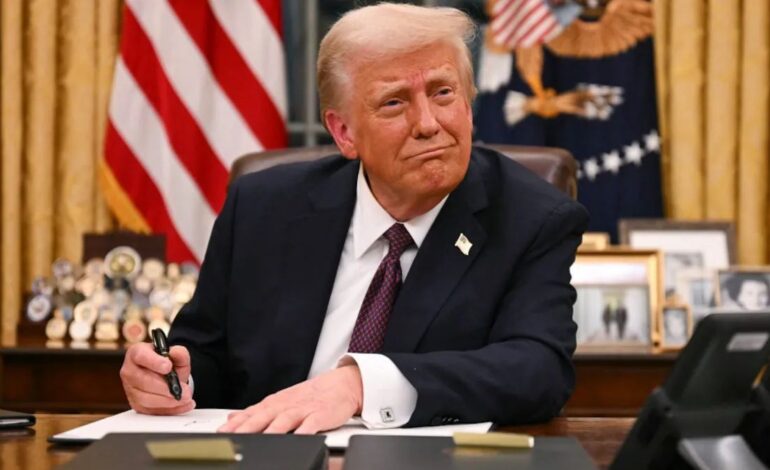

In a high-stakes diplomatic maneuver, Canadian Prime Minister Mark Carney has firmly declared that Canada will not pursue a free trade agreement with China. This statement is a direct response to a stark warning from US President Donald Trump, who threatened to impose a 100 percent tariff on all Canadian goods should Ottawa proceed with a major trade deal with Beijing.
The confrontation escalates a complex trade dispute that places Canada squarely between its largest trading partner and the world’s second-largest economy.
Clarifying the Deal: A Tariff “Rectification,” Not a Pact
Prime Minister Carney sought to clarify the nature of Canada’s recent engagement with China, framing it not as a new free trade deal but as a corrective measure. He explained the agreement merely cuts tariffs on a few specific sectors that had recently been subject to increased duties.
In 2024, both Canada and the US imposed severe tariffs on Chinese electric vehicles and metals. China retaliated with tariffs on key Canadian agricultural exports like canola oil and pork. Carney’s recent move effectively reduces Canada’s 100% tariff on Chinese EVs to 6.1% in exchange for China lifting its retaliatory tariffs on Canadian farm products. The deal includes an annual cap on Chinese EV imports and a commitment from China to invest in Canada’s auto industry within three years.
The American Reaction: Warnings of Economic Ruin
President Trump has portrayed this calibrated agreement as a catastrophic surrender. In social media posts, he claimed “China is successfully and completely taking over the once Great Country of Canada,” and shared a video featuring a Canadian auto executive warning that the domestic industry cannot survive without unfettered access to the US market.
US Treasury Secretary Scott Bessent echoed the sentiment, accusing Carney of “virtue-signaling” and stating, “We can’t let Canada become an opening that the Chinese pour their cheap goods into the U.S.”
A Broader Geopolitical Standoff
This trade skirmish is part of a wider geopolitical rift. Prime Minister Carney recently positioned himself at the World Economic Forum in Davos as a leader of “middle powers” who must band together to avoid being coerced by great powers—a remark widely interpreted as a critique of Trump’s unilateralism. This stance, which upstaged Trump at the forum, likely intensified the friction.
The tension is further inflamed by President Trump’s concurrent push to acquire Greenland, which has unsettled NATO allies, and his historical musings about absorbing Canada into the United States.
Canada’s Precarious Balancing Act
Caught in this crossfire, Canada’s strategy is one of damage limitation. By explicitly rejecting a full free trade deal with China, Carney is adhering to the terms of the US-Mexico-Canada Agreement (USMCA), which requires notification before pursuing pacts with “non-market economies.” His goal appears to be resolving a discrete, damaging trade spat with China while desperately trying to avoid triggering an economically devastating tariff war with the United States.
The episode highlights the extreme pressures faced by US allies in an era of great-power competition and “America First” trade policy. For Canada, navigating this landscape requires a precarious balance: protecting its economic interests with China while unequivocally assuring its southern neighbor that the foundational North American trade relationship will not be undermined. The coming weeks will test whether this delicate balancing act can hold.
Also Read:
US Warship Arrives at Cambodia’s Newly Renovated Naval Base
Top Chinese Military Leader Faces Probe Over Serious Discipline Breach