




Xi Jinping to Meet South Korea’s Lee as Regional Tensions Grow
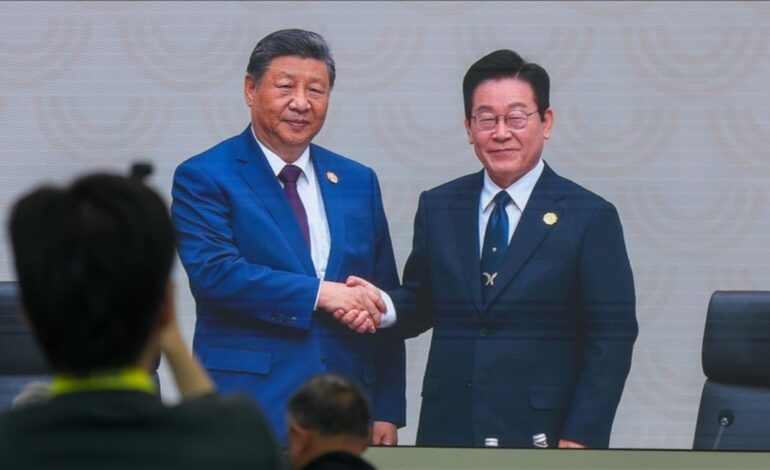

The diplomatic landscape of East Asia continues to evolve as Chinese President Xi Jinping prepares to welcome South Korean President Lee Jae Myung for a state visit beginning this Sunday. This meeting represents more than just routine diplomacy—it signals a deliberate effort by Beijing to solidify its relationship with Seoul during a period of heightened regional uncertainty.
An Unusually Quick Follow-Up
What makes this upcoming visit particularly noteworthy is its timing. Xi and Lee last met just two months ago, making this rapid succession of high-level meetings exceptional in diplomatic terms. Such frequency suggests that both nations see urgent value in strengthening their partnership, particularly in economic cooperation and cultural exchange through tourism.
The context matters significantly here. Relations between China and Japan have deteriorated markedly since Japanese Prime Minister Sanae Takaichi’s November remarks about potential military responses to any Chinese action regarding Taiwan. Against this backdrop, Xi’s invitation to Lee appears carefully timed—scheduled before the South Korean leader’s anticipated visit to Japan.
Professor Kang Jun-young from Hankuk University of Foreign Studies offers an insightful perspective: China seeks to underscore South Korea’s significance in its regional strategy, hoping to engage Seoul meaningfully before it deepens dialogue with Tokyo.
Walking a Diplomatic Tightrope
South Korea finds itself in a delicate position. The Lee administration has made clear its intention to “restore” relations with China, recognizing the practical reality that China remains South Korea’s largest trading partner. This represents a shift from the previous administration under Yoon Suk Yeol, which aligned more closely with Washington and Tokyo while taking a firmer stance on China’s Taiwan policy.
Yet this recalibration doesn’t mean abandoning other partnerships. Lee has explicitly stated he won’t take sides in the China-Japan dispute, aiming instead to maintain balanced relationships that serve South Korea’s interests as a major economic player in Asia.
The challenge intensifies when considering the broader security picture. South Korea hosts approximately 28,500 US troops, primarily focused on countering threats from North Korea. However, American officials have indicated plans to enhance the flexibility of these forces to address wider regional concerns, including Taiwan and China’s expanding military capabilities.
Economic Interests at the Forefront
Beyond geopolitical maneuvering, this visit centers heavily on economic cooperation. South Korea depends on China for nearly half of its rare earth minerals—essential components in semiconductor manufacturing. Additionally, China purchases about one-third of South Korea’s annual chip exports, making it by far the largest market for this critical industry.
Recent discussions between South Korean Industry Minister Kim Jung-kwan and Chinese Commerce Minister Wang Wentao focused on ensuring stable rare earth supplies, underscoring how intertwined these economies have become.
The visit may also explore partnerships in emerging sectors, with discussions expected around critical minerals, supply chain resilience, and green industries. Technology cooperation appears particularly promising, with Chinese companies already positioning themselves to offer alternatives to Western suppliers in Korea’s tech sector.
The North Korea Factor
No conversation between China and South Korea can ignore North Korea. As North Korea’s primary ally and economic supporter, China holds considerable influence over Pyongyang. Lee hopes to persuade Xi to help facilitate dialogue with North Korea, though Pyongyang has shown little interest in Lee’s overtures thus far.
South Korea also plans to address its intentions to develop nuclear-powered submarines, assuring China that these capabilities target only North Korean deterrence, not regional power projection.
Looking Ahead
Wi Sung-lac, Lee’s top security adviser, expressed optimism that this summit could open a “new chapter” in bilateral relations. The two countries are preparing over ten agreements covering economics, business, and climate issues, though they’re reportedly not working on a joint statement.
This visit exemplifies the complex dance of modern diplomacy in East Asia, where economic interdependence, security alliances, and regional rivalries intersect. South Korea must navigate relationships with both its largest trading partner and its primary security guarantor, while managing tensions that could easily spill across its borders.
The outcome of this state visit will likely influence not just bilateral relations, but the broader alignment patterns across East Asia for years to come. As regional tensions continue to simmer, Seoul’s ability to maintain productive relationships across these divides will be tested repeatedly.
Also Read:
Severe Winter Weather Alert: Snow and Strong Winds to Hit Great Lakes and Northeast
Legal Setback for White House as US Judge Blocks Plan to End South Sudan Migrant Protections