



Why the UK Refuses to Recognize Somaliland as an Independent State
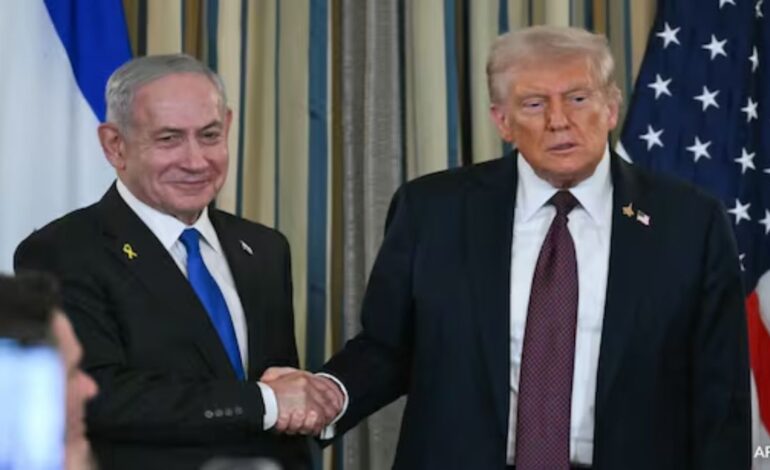

UK Refuses to Recognize Somaliland: In the wake of Israel’s landmark decision to formally recognize Somaliland as an independent state, a key question has emerged: why do other long-standing nations, like the United Kingdom, continue to withhold such recognition? This week, the UK government provided a clear answer, reaffirming its position that it does not recognize Somaliland’s independence and firmly supporting the sovereignty and territorial integrity of Somalia.
This stance is not new, but the recent developments have brought it into sharper focus. For the UK, the matter is guided by a consistent principle in international diplomacy: respect for the existing borders and unity of a sovereign state. Somalia, despite decades of conflict and fragmentation, remains the recognized UN member state whose territory officially includes the Somaliland region.
The British position reflects a broader international consensus, shared by organizations like the African Union and most global powers, including China, which also declined recognition this week. This consensus prioritizes regional stability and the goal of a unified Somali state, often viewing unilateral recognition of breakaway regions as a precedent that could inflame separatist tensions elsewhere in Africa and beyond.
The UK’s historical ties to the region add a complex layer. As the former colonial power of British Somaliland, the UK has deep connections to the area. Somaliland itself bases part of its claim to statehood on its distinct colonial border. However, British policy has consistently chosen to channel engagement through support for dialogue and reconciliation within the framework of a single Somalia, rather than endorsing partition.
For Somaliland, which has maintained de facto independence and relative stability since 1991, this international reluctance is a source of profound frustration. It limits access to global financial institutions, formal trade agreements, and full diplomatic engagement. Yet, for nations like the UK, the calculation extends beyond Somaliland’s internal governance. It involves navigating delicate regional politics, honoring multilateral principles, and avoiding actions that could destabilize the fragile Horn of Africa further.
Ultimately, the UK’s refusal is a deliberate choice to uphold a specific world order—one where borders are not altered by unilateral declarations but through negotiated settlements and mutual agreement. Until such an agreement is reached between Somaliland and Somalia, the international map, in the eyes of London and most world capitals, is unlikely to change.
Also Read:
North Korea Conducts New Long-Range Cruise Missile Test
Trump Says Ukraine and Russia Are Closer to Peace After Zelensky Talks