


Can New Leaders Help Rohingya Refugees Find a Way Back Home?
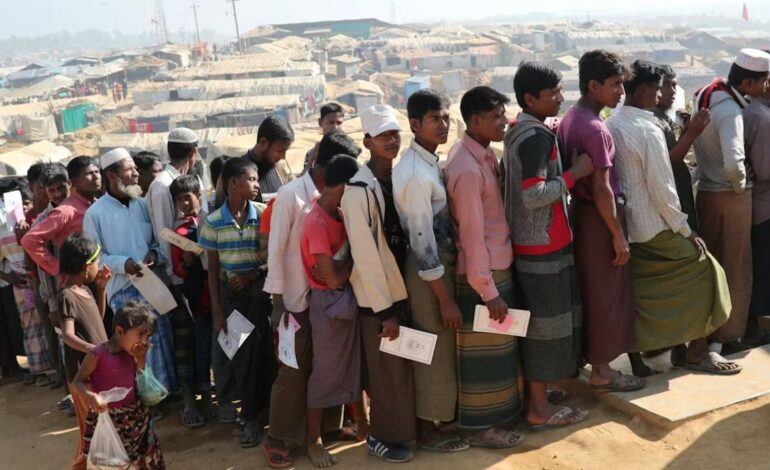

In the sprawling, bamboo-and-tarpaulin cities of Cox’s Bazar, a fragile experiment in self-determination is unfolding. For the first time since over a million Rohingya fled a violent military crackdown in Myanmar eight years ago, refugees have elected their own leadership council. The vote, held across 33 camps, has birthed the United Council of Rohang (UCR), a body carrying the profound hopes of a stateless people for dignity, security, and, above all, a return home.
For refugees like Khairul Islam, 37, the council represents more than administration; it is a lifeline to a lost life. “They are working to take us home,” he says, his voice thick with emotion as he contrasts his past in Myanmar—a thriving timber business, cool shade under tall trees—with the present reality of a single, sweltering room shared with his entire family. “We can hardly breathe,” he confesses. His story echoes through the camps, where 1.7 million people exist in suspended animation, their futures hostage to a political stalemate.
A Voice at the Table
The UCR’s primary mission, as articulated by its president Mohammad Sayed Ullah, is to carve out a seat at the negotiating table. “It’s about us, yet we were nowhere as stakeholders,” he states, highlighting a chronic absence of refugee voice in discussions about their own fate. Dressed in a simple white shirt, he recently stirred a crowd with a poignant reminder of their collective trauma—the graves left behind, the women lost to torture and sea—before steeling them with a call to prepare for return.
This council is not the first attempt at organization. Previous efforts were met with tragedy, most notably the 2021 assassination of prominent activist Mohib Ullah, and a crackdown following a major 2019 rally. Trust was shattered. The UCR’s emergence signals a cautious rekindling of that trust. Young refugees like 18-year-old Mosharraf pin their hopes on it, believing that through better representation and education, a “global consensus” for their repatriation can be built.
The Weight of Expectations and Suspicion
Already, the council is being tested. Refugees are approaching its offices with grievances—reports of torture, theft of meager possessions—suggesting a shift toward seeing it as a legitimate arbiter of justice within the camp’s complex power dynamics.
However, significant shadows loom over this new beginning. Analysts like Thomas Kean of the International Crisis Group note that the elections appeared “closely controlled by the authorities,” raising questions about the council’s true autonomy from the Bangladeshi government, which hosts the refugees. Furthermore, the camps remain perilous. Armed factions like the Arakan Rohingya Salvation Army operate with impunity. A report by Fortify Rights recorded at least 65 Rohingya killed in 2024 alone, a stark reminder that any political progress must navigate a landscape of ongoing violence.
The Long Road Home
The ultimate question remains: Can this new leadership help the Rohingya find their way back to Myanmar? The council’s power to influence Myanmar’s military junta, which faces genocide accusations at the UN, is inherently limited. Its true test may lie in its ability to unify the refugee community, articulate their demands for citizenship and safety with one clear voice, and compel the international community to move beyond aid and toward durable political solutions.
The UCR is a flicker of agency in a prolonged darkness. It is a gamble on the power of collective voice against forces of violence and indifference. For Khairul Islam and millions like him, it is a fragile structure upon which they have placed their dreams of sitting once more under those tall, cool trees in a land they can call home. The world is watching to see if that structure can hold.
Also Read:
How Science Is Changing Early Years Education
Tourist Boat Accident in Indonesia Leaves Spanish Family Missing