



South Korea Approves Law Against False Information Amid Censorship Concerns
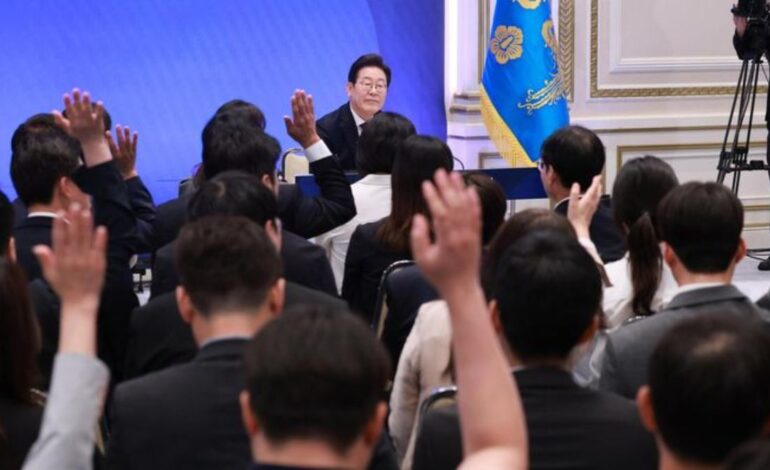

In a move that has ignited fierce debate over press freedom and democratic integrity, South Korea’s National Assembly passed a landmark bill on Wednesday allowing for heavy punitive damages against media outlets for publishing “false or fabricated information.” The legislation, pushed through by the ruling liberal Democratic Party, frames itself as a necessary shield against disinformation but is viewed by critics as a potential weapon for censorship.
The bill passed overwhelmingly by a vote of 170-3, but the tally masks deep controversy. The session followed a 24-hour filibuster by the main conservative opposition People Power Party (PPP), which ultimately boycotted the final vote. Their core argument, echoed by journalist unions and civil liberty advocates, is that the law’s vague language poses a grave threat to free speech and critical reporting.
The Law’s Sharp Teeth
The legislation empowers courts to impose severe financial penalties. News organizations and large YouTube channels found to have disseminated “illegal information or false, fabricated information” to cause harm or seek profit could face punitive damages of up to five times the proven losses. For losses difficult to quantify, courts can award up to 50 million won ($34,200). Furthermore, the country’s media regulator gains authority to fine outlets up to 1 billion won ($684,000) for a repeated offense—defined as distributing court-confirmed false information more than twice.
The Battle Lines: Protection vs. Punishment
Proponents, led by the Democratic Party, argue the law is a long-overdue defense for democracy. They contend that rampant fake news and disinformation poison public discourse, fuel societal division, and enable hate speech. Party spokesperson Park Soo-hyun stressed the law targets only “malicious and deliberate dissemination,” requiring proof of intent and exempting satire, parody, and legitimate criticism. “What the law targets is not criticism but the malicious and deliberate dissemination of false information,” Park stated.
However, opponents see a dangerously broad tool for intimidation. PPP lawmaker Choi Soo-jin warned during the filibuster that the bill fails to clearly define the “degree of inaccuracy” that would trigger penalties. This vagueness, critics say, could allow the law to be applied to content with minor errors or robust investigative claims, effectively silencing critics with the specter of ruinous lawsuits.
The National Union of Media Workers issued a urgent statement, calling on President Lee Jae Myung—who is being urged to veto the bill—and the Democrats to address these fears. They argue that regulating falsity by law risks a severe chilling effect, exposing media companies to abusive legal actions and discouraging scrutiny of powerful entities like public officials and large corporations. The union pleaded for “carefully defining the law’s scope” to ensure it targets only an extreme, tiny portion of content and does not infringe upon fundamental freedoms.
A Global Dilemma, A Local Flashpoint
This legislative struggle places South Korea at the heart of a global dilemma: how can societies combat deliberate, harmful disinformation without stifling the free press and expression essential to democracy? The Democrats note a clause prohibiting lawsuits aimed at “obstructing just criticism or oversight,” but legal experts call this protection vague and difficult to enforce in practice.
As the bill now moves toward potential enactment, the world watches. Will it become a precise scalpel to cut out malicious falsehoods, or a blunt instrument that weakens the vital role of a free press? The answer will resonate far beyond Seoul, in every nation grappling with the same turbulent intersection of truth, technology, and liberty.
Also Read:
French Postal Service Faces Cyberattack Claims by Pro-Russian Hackers