



What Could US Sanctions Mean for the UN Palestinian Refugee Agency?
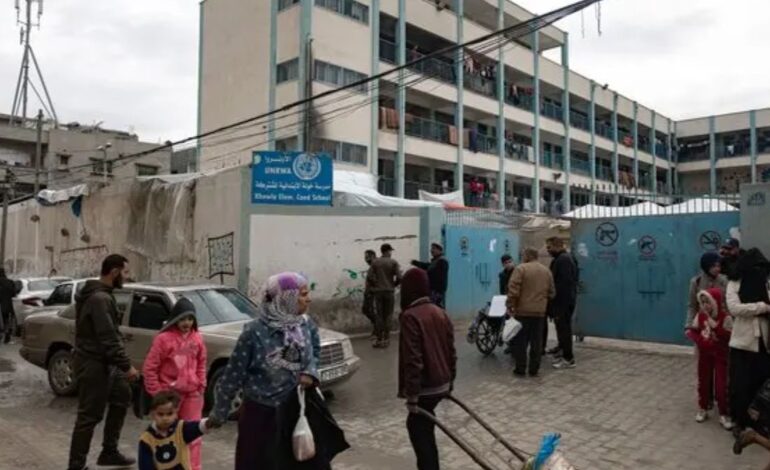

The Trump administration is actively considering an unprecedented step: imposing terrorism-related sanctions on the United Nations Relief and Works Agency for Palestine Refugees (UNRWA). According to sources familiar with the discussions, this possibility has triggered serious legal and humanitarian concerns within the State Department, raising alarm about the future of aid for millions of Palestinians.
UNRWA operates across Gaza, the West Bank, Lebanon, Jordan, and Syria, providing essential education, healthcare, and social services to Palestinian refugees. In Gaza particularly, the UN has described the agency as the “backbone” of the humanitarian response during the devastating two-year war between Israel and Hamas.
The potential sanctions follow years of U.S. criticism and a decision in January 2024 to suspend American funding—historically UNRWA’s largest source—after Israel alleged a small number of agency staff were involved in the October 7, 2023, Hamas attacks. Secretary of State Marco Rubio later accused UNRWA of becoming “a subsidiary of Hamas.”
Discussions within the administration have reportedly included the drastic option of designating UNRWA as a Foreign Terrorist Organization (FTO), which would financially isolate the agency and potentially criminalize engagement with it. A blanket sanction could cripple UNRWA’s operations entirely, throwing refugee relief into disarray amid an already severe funding crisis.
William Deere, director of UNRWA’s Washington office, called the prospect “both unprecedented and unwarranted,” noting that multiple independent investigations, including one by the U.S. National Intelligence Council, have affirmed the agency’s neutrality and indispensable role.
Inside the State Department, the discussions have reportedly caused friction. While politically appointed officials have driven the push for sanctions, many career diplomats and lawyers have expressed reservations, citing profound humanitarian and legal complications. The United States is, after all, a founding member and host country of the United Nations, which established UNRWA in 1949.
A State Department official, when asked for comment, called UNRWA a “corrupt organization with a proven track record of aiding and abetting terrorists,” adding that “everything is on the table” but no final decision had been made.
The implications extend far beyond bureaucracy. Sanctioning a UN agency would be a highly unusual move, typically reserved for groups like ISIS or Al-Qaeda. It could also strain relations with key U.S. allies who continue to fund UNRWA and might even face secondary sanctions for doing so.
With over 370 UNRWA workers killed in Gaza during the war and the agency already banned from operating in Israeli-controlled areas, the move would deepen the humanitarian crisis in a region where UNRWA is often the last line of defense against famine and collapse. As deliberations continue, the world watches to see whether diplomatic pressure will override the urgent call for humanitarian relief.
Also Read:
Guinea-Bissau’s Decision to Restrict Transitional Leaders: A Step Toward Fair Governance?
Why Bulgaria’s Court Refused to Extradite the Beirut Blast Shipowner