




Indonesians Climb Over Logs to Reach Aid Centres as Flood Deaths Cross 900
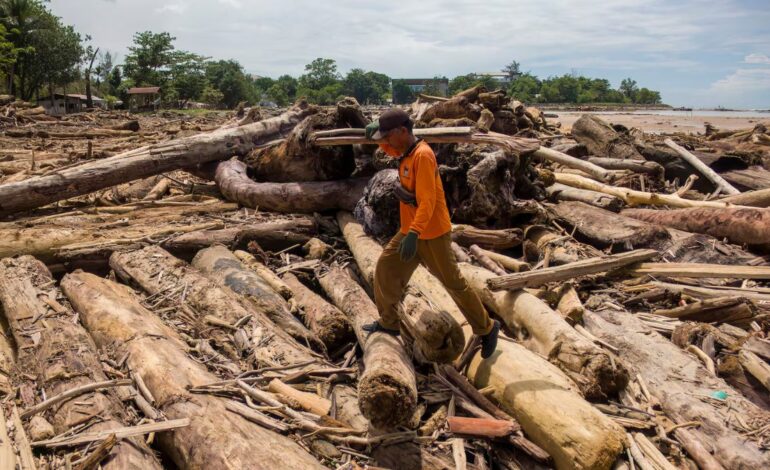

In the sodden landscape of Aceh Tamiang, survivors navigate a treacherous path to survival. On Saturday, residents climbed over slippery, scattered logs and passed overturned cars, walking for an hour to reach a volunteer-run aid distribution point. This arduous journey underscores the dire reality in northern Sumatra, where the death toll from catastrophic floods and landslides has now risen above 900.
Official data released Saturday confirms 908 fatalities across three provinces on Sumatra, with another 410 people still missing. The disaster, triggered by intense cyclone-induced rainfall, has also claimed approximately 200 lives in southern Thailand and Malaysia, marking a regional tragedy.
For those who survived, the struggle has shifted from immediate escape to sustained endurance. In Aceh Tamiang, access remains severed. Volunteers are providing critical supplies—distributing clean clothes and trucking in fresh water for residents to fill plastic bottles. The scene is one of resilient community effort amid official logistical breakdowns.
The human scale of the hardship is captured in stories like that of 14-year-old Dimas Firmansyah. Stranded with others at his Islamic boarding school for a week, he described how students took turns searching for food and were forced to boil and drink floodwater. “We stayed for about a week there,” Dimas said, making a plea for the government to witness the calamity firsthand.
Local officials are urgently requesting that the national government declare a state of national emergency, a move that would unlock additional funds and resources for rescue and relief. This call contrasts with President Prabowo Subianto’s assessment earlier this week that the situation was improving and current arrangements were sufficient.
Amid the response, a crucial investigation is underway into the disaster’s causes. Environmental groups point to extensive deforestation from mining and logging operations as a key factor in amplifying the flood’s damage. The Indonesian environment ministry has temporarily halted the operations of several companies suspected of clearing forests in the affected areas, including North Sumatra Hydro Energy, which runs a major China-funded hydropower plant, and Agincourt Resources, operator of the Martabe Gold Mine. Aerial surveys suggest land-clearing in the sensitive Batang Toru region may have worsened the flooding.
As survivors continue their daily treks over logistical and natural obstacles, the catastrophe raises pressing questions about environmental stewardship, corporate accountability, and disaster preparedness. The people of Sumatra are walking a path not only to secure food and water today, but also toward a future where such a journey is no longer necessary.
Also Read:
Inside Maduro’s ‘Respectful’ Call with Trump: What It Means for Future Ties